 Sprinkler Age A Publication of the American Fire Sprinkler Association
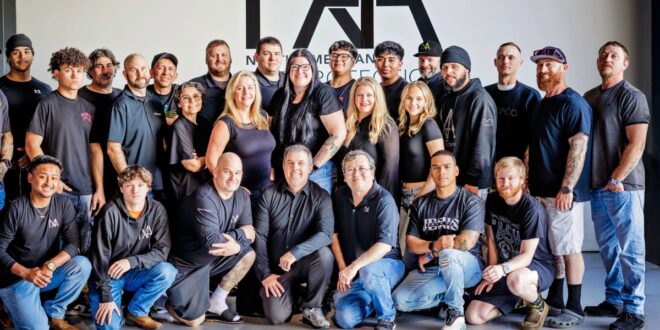
We Must Teach Leadership Before We Expect Ownership
If you spend enough time around fire sprinkler contractors, the conversation eventually turns to labor. Hiring, turnover, and the next generation dominate nearly every discussion. I’ve spent years trying to solve the same workforce challenge and assumed the answer was more opportunity, more responsibility, more leadership roles, and more chances to advance.
Eventually, I realized I was asking the wrong question. The issue wasn’t whether people wanted opportunity. The issue was whether they understood what came with it. Ownership isn’t a title. Ownership is caring about the outcome. It’s noticing problems before they become someone else’s responsibility and taking accountability when nobody is watching.
Most of us were never taught ownership either. We learned it by watching, getting burned, and figuring it out through trial and error. Maybe that’s why we struggle to teach it.
Opportunity Without Ownership
As owners and leaders, we spend a lot of time talking about opportunity, promotions, advancement, and career paths. But opportunity without ownership is just a title waiting to disappoint someone. When somebody tells me they want more responsibility, my answer today is simple: “Good. We have plenty of it.” Ownership begins when someone starts caring about the outcome instead of just the task.
Defining Ownership
One of the challenges with ownership is that we rarely define it. We tell employees to take ownership, but we don’t always explain what that means. Does each employee understand how their role affects the bottom line? When employees understand how callbacks, rework, delays, and change orders affect profitability, they begin to see their work differently.
Ownership looks different at every level of the organization. For an apprentice, ownership might mean noticing missing material before it delays the crew. For a fitter, it might mean catching a design conflict before installation begins. For a foreman, it means owning safety, quality, production, and crew development. For a project manager, it means owning customer relationships, profitability, and project outcomes. The responsibility changes, but the mindset stays the same. Ownership means caring about the result, not just completing the task .
What a Foreman Actually Owns
Ask 10 apprentices what a foreman does, and most will describe the technical responsibilities. In reality, that’s only part of the job.
A foreman doesn’t own the pipe on the ground. A foreman owns the outcome. A foreman owns safety, planning, production, crew development, material shortages, relationships with other trades, and the countless issues that can derail a project. They own helping a homesick employee after weeks on the road just as much as they own installation quality.
Leadership often appears long before a promotion. The people who rise are usually those who stay calm in uncertainty, think beyond their assigned task, and focus on the outcome. That’s ownership. And it’s usually visible long before the title ever arrives.
We Promote Fitters and Hope They Become Leaders
One of the oldest mistakes in our industry is assuming the best producer automatically becomes the best leader. Someone can install pipe faster than anyone on the crew, understand the code, and solve field problems, yet still struggle as a foreman.
Leadership requires skills most of us were never formally taught: coaching, communication, planning, conflict resolution, and team development. Fortunately, organizations such as the American Fire Sprinkler Association (AFSA) and its NextGen are investing in leadership development because leadership should not have to be learned entirely through trial and error.
Ownership Has to Travel
When your crews are spread across multiple states, micromanagement isn’t an option. Ownership must travel with the employee because management can’t. “The goal isn’t to build employees who need us. The goal is to build leaders who can operate without us. Leaders who solve problems without waiting for permission,” says Derek Dingman, NAFPCO, superintendent.
I can’t stand beside every foreman every day or inspect every decision. Accountability can’t depend on me. It must come from ownership, personal pride, and teammates holding each other to a higher standard. That’s why I reward employees who speak up; the person who spots a risk, admits a mistake before it becomes a problem, or raises their hand when something doesn’t look right. Those behaviors are ownership.
Crews must be empowered to make real-time decisions when they encounter field conflicts, design challenges, or material shortages. They need to know leadership will support them while they work through the problem. That doesn’t mean every decision will be correct. It means mistakes become coaching opportunities instead of rescue missions.
When someone calls and asks, “What do you think we should do?” I’ve trained myself not to answer immediately. Instead, I ask them to define the problem and bring me two possible solutions. Employees grow through participation, critical thinking, and ownership.
Leadership isn’t about having all the answers. It’s about helping others learn how to find them. That’s how ownership becomes part of the culture.
The Next Generation Wants Clarity, Not Less Accountability
Let’s challenge a common assumption. Maybe the workforce hasn’t changed nearly as much as we think. The next generation wants growth, respect, opportunity, feedback, and meaningful work. That’s not generational. That’s human. Most of us wanted those same things when we started our careers.
What’s different is that they’re more willing to say it out loud. They’re more likely to ask about advancement and less willing to wait years for someone to notice them. I don’t see that as a weakness. I see it as information.
The next generation isn’t asking for less accountability. They’re asking for accountability to be defined. When employees ask about advancement, they’re telling us they want to grow. The question is whether we’ve clearly explained the responsibilities that come with the next role.
Too often, we teach people how to earn a title without explaining what it means to carry it. That’s where expectations and reality begin to diverge. Rather than criticize the desire for clarity, we should embrace it. Ownership can be explained, trained, measured, and rewarded.
“At North American Fire Protection, we’re investing heavily in leadership development through field training, hands-on learning, coaching, and feedback,” states Mitch Bortner, NAFPCO vice president. “Our goal is not only to teach what to do, but why it matters and how individual decisions affect project outcomes, customers, and profitability.”
Most importantly, we’re not simply handing employees expectations. We’re involving them in defining success because people are far more likely to embrace accountability when they understand what it looks like and why it matters.
Leadership Becomes Scalable When Ownership Becomes Teachable
Most people want the rewards of leadership before they’ve felt the weight of it. That’s not laziness; it’s inexperience. Nobody has shown them what that responsibility looks like.
I’ve come to believe the next generation isn’t asking for less accountability. They’re asking us to define it. If that’s true, the responsibility shifts back to leadership. We can keep complaining about the workforce we wish we had, or we can develop the workforce we do have.
When accountability is defined, ownership becomes teachable. When ownership becomes teachable, leadership becomes scalable. And when leadership scales, companies grow.
My crews travel hundreds of miles and install thousands of feet of pipe. But the journey I care most about isn’t measured in miles or footage. It’s the journey from opportunity to ownership. Every successful career I’ve watched develop in this trade has required both.
Opportunity creates potential. Ownership creates leaders. The companies that will win the next generation won’t be the ones creating more opportunities. They’ll be the ones teaching ownership. Employee development begins when opportunity and ownership travel together.
ABOUT THE AUTHOR: Beckie Bortner is president and co-founder of North American Fire Protection (NAFPCO). Entering the industry from a non-traditional background, she helped scale NAFPCO into a national design-build fire sprinkler contractor specializing in complex industrial, cold storage, food processing, pharmaceutical, and mission-critical facilities. Bortner serves on the AFSA NextGen Committee and is committed to developing the next generation of fire sprinkler professionals and industry leaders.